You notice it immediately when a bracelet looks right. It does not fight the watch, it does not feel random, and it does not look like an afterthought. If you have ever asked what wrist should men wear bracelets on, the honest answer is simple at first glance and more personal once style, comfort, and meaning enter the picture.
For most men, the bracelet goes on the non-dominant wrist. If you are right-handed, that usually means the left wrist. If you are left-handed, it is often the right. This choice feels natural because the non-dominant hand moves less, which means the bracelet gets less wear, feels less distracting, and sits with more control throughout the day.
That said, style is never only about rules. A bracelet is one of the most personal accessories a man can wear. It can sharpen an outfit, balance a watch, or carry a symbolic meaning that matters to you. The right wrist is the one that looks intentional and feels effortless.
What wrist should men wear bracelets on most often?
The classic answer is the non-dominant wrist. This is the safest choice if you want a bracelet to feel natural from the first wear.
There are practical reasons for this. Your dominant hand does more work - typing, driving, opening doors, carrying bags, shaking hands. A bracelet on that side is more likely to knock against surfaces or shift constantly. On the non-dominant wrist, it tends to stay cleaner in appearance and more comfortable over long hours.
There is also a visual reason. Accessories look strongest when they feel composed rather than busy. Wearing a bracelet on the quieter hand creates that sense of balance. It reads as considered, not crowded.
If you are new to men’s jewelry, start there. It is the easiest option to wear with confidence.
When the dominant wrist makes more sense
The non-dominant wrist may be the default, but it is not a law. Some men prefer the bracelet on the dominant wrist simply because it feels better or gets seen more often. If that is your instinct, trust it.
This can work especially well if you do not wear a watch and want the bracelet to stand on its own. A bold stone bracelet, a darker bead mix, or a substantial metal piece can feel stronger on the hand you naturally lead with. It gives the accessory a little more presence.
There are trade-offs. You may notice more movement, more contact with desks and counters, and more wear over time. For some men, that is worth it. Jewelry should fit your real life, not only a style formula.
What wrist should men wear bracelets on with a watch?
This is where the decision gets more specific. If you already wear a watch every day, the bracelet usually goes on the opposite wrist. That keeps both accessories distinct and avoids making one side feel heavy.
A watch already carries visual weight. It has a case, a strap, a dial, and often a polished finish that draws attention. Putting a bracelet on the other wrist gives the outfit symmetry without trying too hard. It also lets each piece breathe.
For example, if you wear your watch on the left wrist, wear your bracelet on the right. This is a clean, modern setup and probably the most foolproof way to style both.
That said, some men like stacking a bracelet with a watch on the same wrist. This can look sharp when done with restraint. The materials need to work together, and the bracelet should not overpower or scratch the watch. A slim leather bracelet next to a steel watch can feel refined. A smooth gemstone bracelet paired with a darker watch can also work well, especially if the colors complement each other.
If you stack on the same wrist, keep the bracelet smaller or softer in profile than the watch. Let the watch lead, and let the bracelet support.
Style matters more than superstition
Some people ask whether bracelets should be worn on a certain wrist for spiritual, energetic, or symbolic reasons. You will hear different views depending on cultural tradition, personal belief, or the type of stone involved.
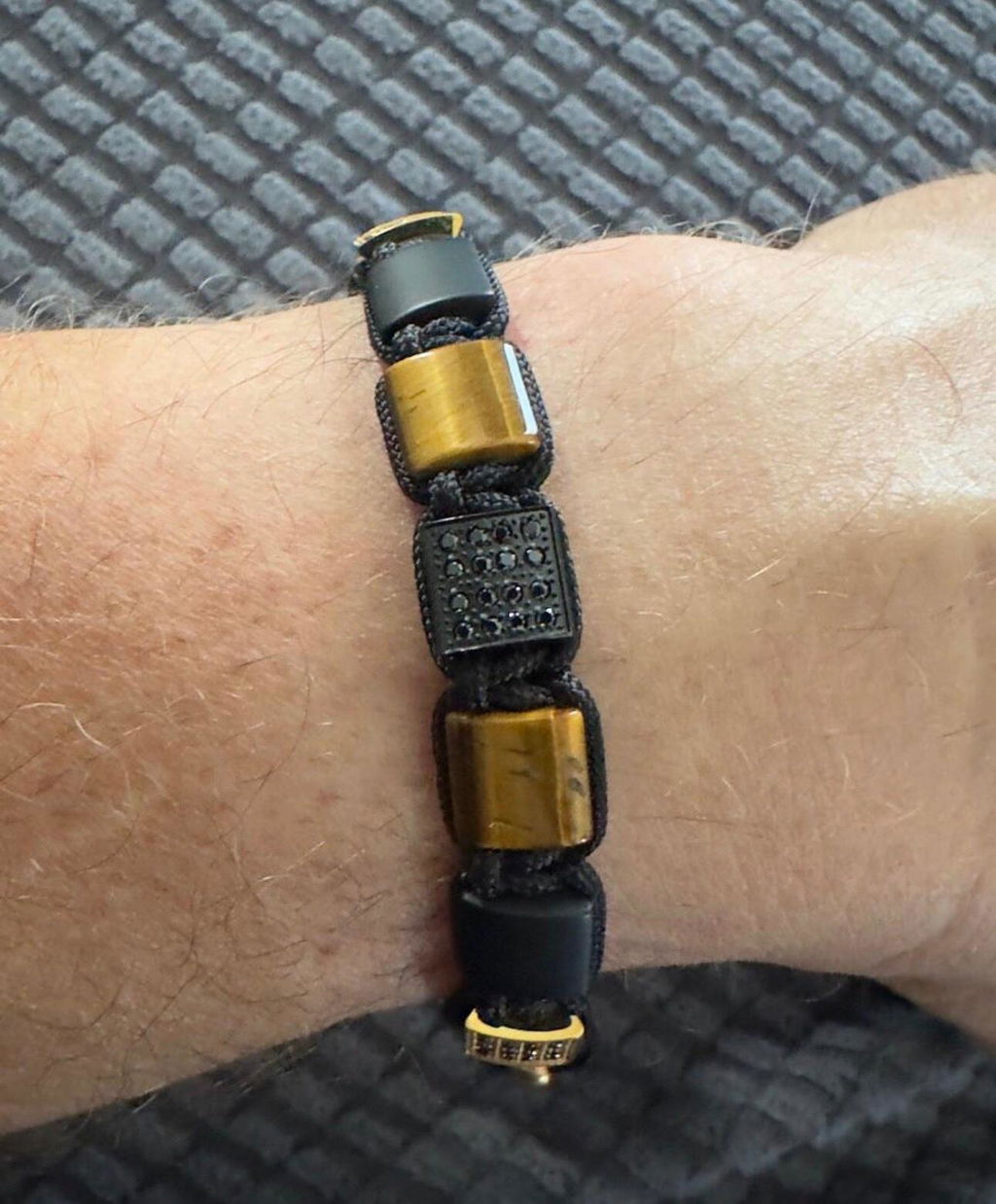
For some men, the left side is associated with receiving energy, while the right is associated with action and expression. That idea can matter if you choose jewelry for reasons beyond style. A bracelet made with black onyx may feel like a grounding piece. Tiger eye might represent focus and confidence. Lapis lazuli may connect with wisdom and clarity.
There is no single rule that applies to everyone. If the symbolism matters to you, wear the bracelet on the wrist that aligns with your intention. If your priority is styling, go with comfort and balance first. The strongest choice is the one that feels deliberate.
How fit changes the right wrist decision
A bracelet can be on the correct wrist and still look wrong if the fit is off. This is where a lot of men miss the mark.
If the bracelet is too tight, it looks restrictive and feels uncomfortable by midday. If it is too loose, it slides too much, flips around, and loses that clean, masculine line. You want a fit that sits securely with a bit of movement, but not so much that it constantly drops onto the hand.
Why does this matter when choosing a wrist? Because your two wrists may not feel identical in use. One side may handle a watch better. The other may allow a bead bracelet to sit more naturally. If you are deciding between left and right, try the bracelet on both sides for a full day. Sit at your desk, drive, text, and move normally. The better wrist usually reveals itself fast.
Matching the bracelet to your look
The right wrist also depends on what kind of bracelet you are wearing and what you are wearing it with.
A minimal black bracelet with a matte finish works almost anywhere. It has the versatility of a classic accessory and can disappear into a sharp monochrome outfit or add depth to casual layers. A richer stone like tiger eye or lapis brings more presence, which may be better on the wrist that is not already occupied by a watch.
If your wardrobe is tailored and polished, keep the bracelet placement clean and intentional. One bracelet, one wrist, no clutter. If your style leans more relaxed, you have more room to experiment with texture, stacking, and contrast.
Outfit color matters too. Warm stones tend to pair well with earthy tones, brown leather, olive, navy, and cream. Dark stones feel strong with black, gray, denim, and crisp white. When the bracelet visually connects with the rest of your look, the wrist choice becomes less noticeable because the whole outfit feels aligned.
Should men wear bracelets on the left or right for formal occasions?
For formal settings, less is usually stronger. If you are wearing a suit, dress shirt, or elevated evening look, the cleanest move is one understated bracelet on the wrist opposite your watch, or no watch at all and one refined bracelet on your non-dominant wrist.
Formal style rewards control. A loud stack can distract from an otherwise sharp look. A single, well-made bracelet in a premium material feels far more confident than piling on accessories for effect.
This is also where material quality shows. Natural stones, polished metal details, and a handcrafted finish stand out in a quieter, more powerful way. They do not need volume to make an impression.
The best rule is intention
Men’s jewelry looks best when it feels worn with purpose. That is true whether you wear a single bracelet every day or rotate pieces depending on mood, outfit, or meaning.
If you want the simplest answer to what wrist should men wear bracelets on, start with the non-dominant wrist. If you wear a watch, place the bracelet on the opposite side. If symbolism matters to you, let your intention guide the choice. If comfort tells you otherwise, listen to that too.
A bracelet should add something to the man wearing it - confidence, balance, presence, or a reminder of what he stands for. That is why the right wrist is never only about left or right. It is about wearing the piece in a way that feels sharp, natural, and fully your own.
The best bracelet does not ask for attention. It earns it the moment you put it on.